Fermented and Fabulous: Rediscovering the Magic of Living Foods
My own adventures in fermentation began with kombucha — or more precisely, with a SCOBY. This strange, jelly-like culture sits in sweetened tea and slowly transforms it into the tangy, lightly fizzy drink many of us now know as kombucha. SCOBY is an acronym for Symbiotic Culture of Bacteria and Yeast, which sounds more like something from a school science lab than a kitchen counter. But that is exactly what it is: a living community of microbes working together to turn ordinary tea into something sharp, sparkling and full of the good stuff. If turning water into wine at Cana impressed you, the humble SCOBY might at least deserve a raised eyebrow.
The Ancient Art of Keeping Food Alive
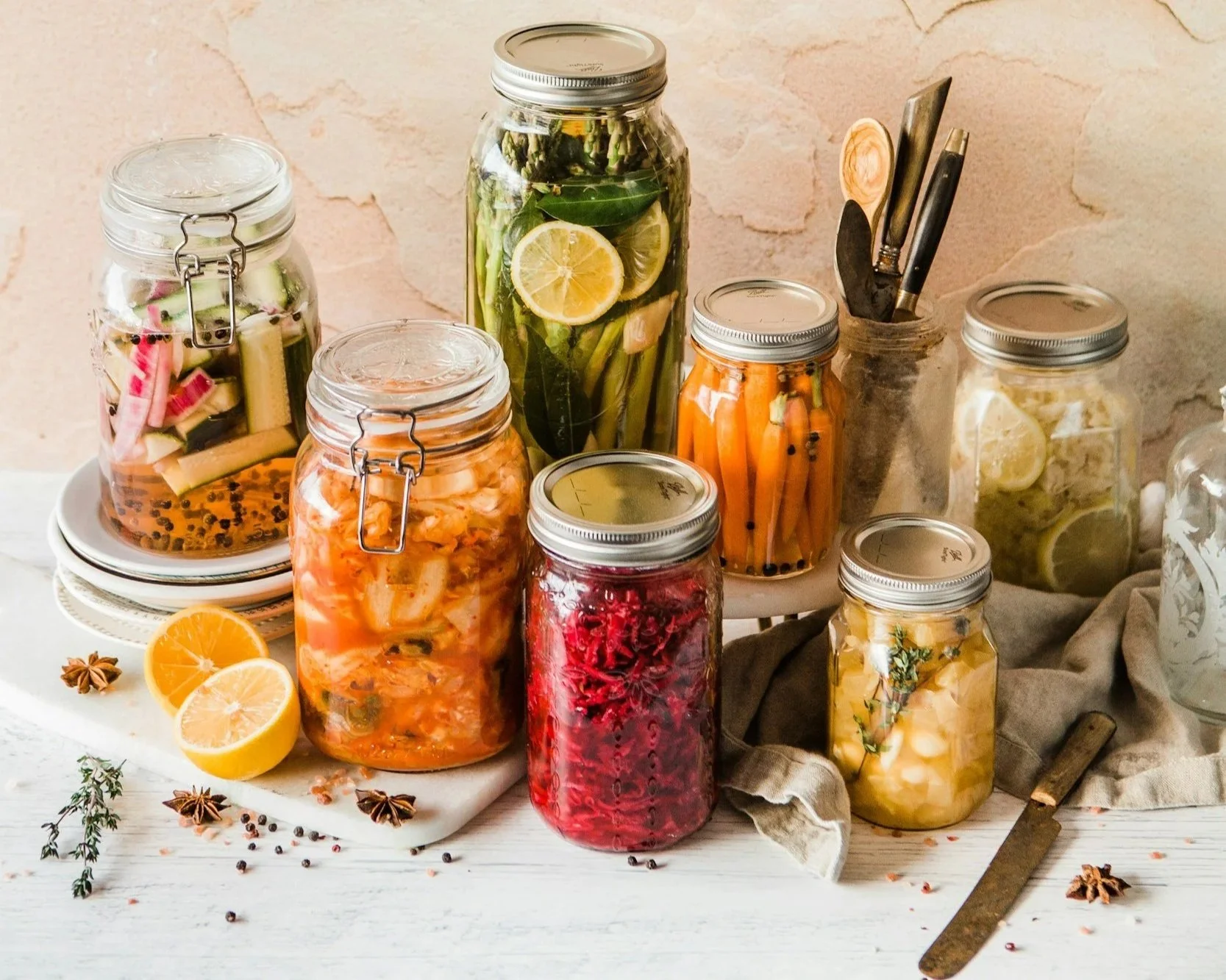
But kombucha is only one small part of a much older story. Humans have been fermenting food for thousands of years — long before fridges, freezers or endless shelves of long-lasting foods in the supermarket. Fermentation was one of our great survival skills. It preserved the harvest, stretched food through leaner months, transformed flavour and made many foods more nourishing and digestible. Across the world, nearly every culture has its own fermented foods. Korea has kimchi, made from cabbage, radish, chilli, garlic and time. Japan has miso, tamari, natto and koji. Germany and Eastern Europe have sauerkraut. India has dosa and idli batter, fermented until light and bubbly. Ethiopia has injera, a flatbread made from fermented teff flour. The Middle East has yoghurt, labneh and pickled vegetables. Mexico and Central America have drinks such as tepache and pulque. Here in Ireland, our fermented traditions are woven through buttermilk, cheese, butter, beer, sourdough, pickles and cured foods.
How It Actually Works
Fermentation was never just a health trend. At its simplest, fermentation happens when microorganisms — bacteria, yeasts or moulds — transform sugars and starches in food. In the process, they create acids, gases, alcohols and other compounds that change taste, texture and shelf life. Cabbage becomes sauerkraut. Milk becomes yoghurt or kefir. Flour and water become sourdough. Soybeans become miso or tempeh. Tea becomes kombucha. Grapes become wine. Barley becomes beer. Ordinary ingredients are changed by invisible life.
Fermentation also asks something of us that modern food rarely does: a little patience. You salt the cabbage, pack it into a jar, press it down under its own brine, and then leave time and microbes to do their work. Over the next few days, the natural bacteria begin to transform the sugars in the cabbage, creating the tangy acidity that preserves it and gives sauerkraut its distinctive flavour. It is a simple process, but a remarkable one — a humble cabbage becoming something brighter, sharper and far more interesting.
This is where old traditions meet modern science. We now know that these foods can support the gut microbiome — that vast community of microorganisms living mainly in our digestive tract. These microbes play a role in digestion, immune function, inflammation, nutrient production and even communication between the gut and brain. Adding fermented foods intentionally and regularly is one simple way to bring more microbial diversity, acidity, flavour and digestive support into the diet. Some bring live microbes, especially when they are raw or unpasteurised, while others may still provide beneficial compounds created during fermentation. This process can change the food itself, often improving flavour, digestibility and nutrient availability. Yoghurt, for example, is often better tolerated than milk because bacteria help break down some lactose. Traditionally fermented sourdough can alter the structure of bread and may make it easier for some people to digest, while fermented soy foods such as miso and tempeh can improve flavour and support the availability of beneficial plant nutrients.
Traditional food cultures understood this long before we had words like “microbiome”. Fermented foods were rarely eaten in huge portions. They appeared as condiments, sides, starters and staples — sauerkraut with meat, miso in broth, yoghurt with grains, pickles with rich meals, buttermilk in bread. They brought acidity, brightness and balance. They helped heavier foods feel lighter and added complexity to simple meals.
Where to Begin
This is where fermented foods belong in our own kitchens too — not as another wellness trend, but as small, useful, delicious habits that fit naturally into the meals we already eat. A spoonful of sauerkraut can sit happily beside eggs or cheese, live yoghurt is lovely with stewed apple, miso can be stirred into soup after cooking, kefir can be blended with berries, and pickled onions can brighten up leftovers. Sourdough with lunch or a glass of kombucha in place of a fizzy drink are simple additions and swaps rather than grand gestures; the kind of small kitchen nudges that, over time, can make everyday food more interesting and more supportive.
They also remind us that food is not inert. It is not just calories, grams and labels. Food is alive with relationships — between soil, plant, animal, microbe, cook and eater. The cabbage in the jar is connected to the soil it grew in, the salt that draws out its juices, the bacteria that transform it, and finally to the person who eats it.
Of course, a little common sense is needed. If you ferment at home, use clean jars, clean hands, good recipes and the right salt ratios. Keep vegetables submerged under their brine. Do not eat anything that smells rotten rather than pleasantly sour, or anything with suspicious mould. People who are pregnant, immunocompromised, very frail or medically vulnerable may need individual advice around unpasteurised fermented foods.
Small Habits, Big Flavour
For most of us, fermented foods are a lovely way to expand the life and flavour of our meals. Start small. Your gut does not need kefir, kimchi, kombucha and sauerkraut all on the same heroic Monday morning. Begin with a teaspoon or two alongside food and build slowly. You do not have to make everything yourself either. Buy a good live yoghurt. Try a jar of raw sauerkraut from the fridge section. Add miso to your shopping basket. Support local cheesemakers and bakers. Then, when curiosity grabs you, make something simple: pickled onions, basic sauerkraut, a sourdough starter, or perhaps your own kombucha.
Fermentation is ancient, practical, scientific and a little bit magical. It belongs to home cooks and elders, monks and farmers, brewers and bakers, scientists and slightly overexcited kombucha drinkers like myself. In a world that often feels overly processed, overly sanitised and far too fast, fermentation brings us back to patience, participation and trust. It reminds us that nourishment is not only something we consume. Sometimes, it is something we tend.