Strawberry Fields…for Another While Yet
The first local strawberries always seem to mark the real beginning of summer, and for a few weeks we remember what strawberries are actually meant to taste like. By now, that first flush of excitement has passed, Wimbledon has packed away the whites along with the strawberries and cream, yet somehow we are still finding delicious Irish strawberries in the shops and at roadside stalls. Perhaps the warm spell helped some of them along, although heat is not always the strawberry grower’s friend. The plants are shallow-rooted and can struggle when the ground becomes too dry. Our extended season owes as much to careful growing, protective tunnels and modern varieties that fruit later or keep producing throughout the summer. Whatever the reason, we are not complaining. A good strawberry in late July still deserves our full attention.
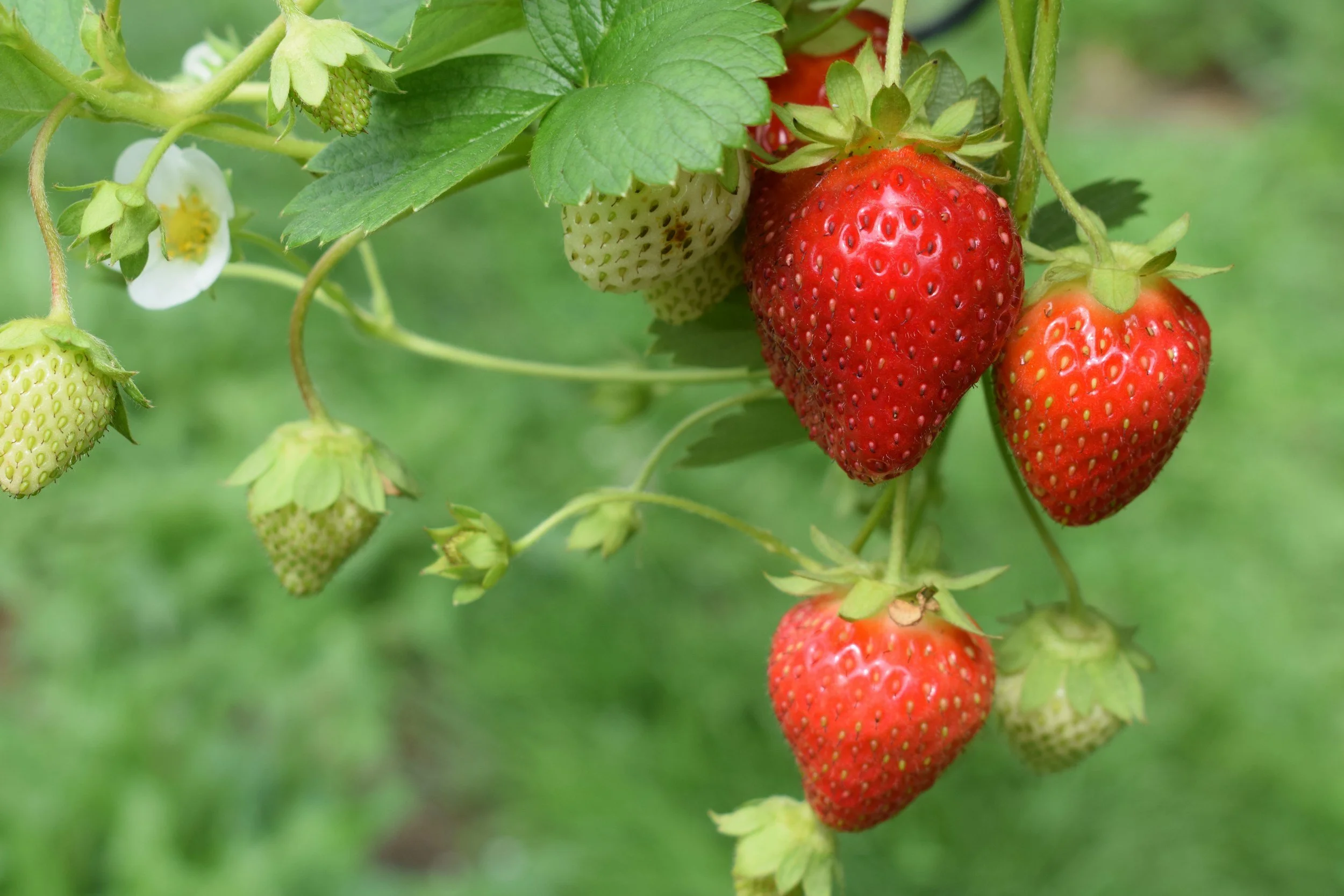
For centuries, people in Europe gathered tiny wild or woodland strawberries, Fragaria vesca, from hedgerows, woodland edges and grassy banks. They are the same little perennial strawberries still found in many Irish gardens today: small, intensely fragrant and apparently worth the effort of stooping for, although gathering enough for to fill a punnet must have required more patience than most of us now possess. Charming as these little strawberries are, they are not the direct equivalent of the large, plump fruit we buy today. The modern strawberry came from a much more adventurous history, involving two continents, a spy and a trip across the pond.
A Spy, Two Continents and a Strawberry
During the 1500s, the Virginia strawberry, native to eastern North America, was brought to Europe. It was sweet and flavoursome, but still quite small. Then, nearly two hundred years later, a French naval officer and spy named Amédée-François Frézier travelled to Chile to check out what the Spanish were getting up to there . While taking notes on harbours, cannons and military defences, he also noticed that local people were growing unusually large strawberries. This may be the only time espionage has made a meaningful contribution to dessert.
Frézier brought several Chilean strawberry plants back to France. The Ooh-la-las for the large fruit was soon hushed as the plants did not initially perform very well. However, the Chilean strawberry soon crossed the Virginian strawberry in European gardens – et voila! A plant combining size, flavour and productivity. That hybrid, Fragaria × ananassa, became the ancestor of most cultivated strawberries grown today.
What the wild strawberry lacks in size, it often makes up for in perfume; one tiny fruit can smell more convincingly of strawberries than an entire supermarket punnet bought out of season. Strawberries were once valued for more than their fruit. The leaves and roots of wild strawberries were brewed as teas in European herbal traditions, largely because their tannins gave them an astringent quality, while the fruit appeared in syrups, preserves and skin remedies. Strawberry juice even found its way into the beauty routines of pale, well-to-do ladies hoping for a fresher complexion.
Not Quite a Berry
Yet perhaps the most curious thing about the strawberry is not how people used it, but what it actually is. Botanically speaking, it is not a berry at all. It is more closely related to raspberries and blackberries, although the part we eat develops a little more like an apple. The red flesh is the swollen base of the flower, while each of those apparent “seeds” is a tiny individual fruit called an achene, containing its own seed. A strawberry may carry around 200 of them — a crowd of little fruits pretending to be one.
Its botany may be complicated, but nutritionally the strawberry is refreshingly straightforward. It is mostly water, relatively low in natural sugar and provides fibre along with an impressive amount of vitamin C. Vitamin C supports normal collagen formation in the skin, blood vessels, bones and connective tissues, helps the immune system function normally and improves our absorption of iron from plant foods.
Strawberries also contain anthocyanins, ellagic acid and other polyphenols, the naturally occurring plant compounds responsible for much of their colour and some of their protective qualities. Research continues into their possible role in cardiovascular and metabolic health, although, as ever, the benefit comes from eating them as part of a varied diet rather than treating the punnet as a prescription. Their high water content is welcome in warmer weather, while their vitamin C supports normal collagen formation at a time when our skin may be getting more sun and exposure. Not, obviously, as a substitute for sunscreen, but as one useful part of the summer diet.
They also play well with the other foods around us now. Their vitamin C helps us absorb more of the iron from leafy greens, lentils and beans, while yoghurt, oats, nuts and seeds make them part of a more sustaining breakfast. Alongside blackcurrants, raspberries and cherries, they add another mixture of colourful plant compounds to the plate. Nature rarely puts all her good ideas into one food, which is why variety matters far more than chasing whichever fruit happens to be fashionable this week.
No Prescription Required
Of course, there is no need to make every strawberry work for its nutritional living. Eat them straight from the punnet, preferably at room temperature, and do not even think about what they are doing for you. Add yoghurt or cream, crush them onto good bread, or leave them briefly with a little lemon juice and black pepper.
Wexford strawberries may be enjoying a particularly good season and are used to hogging the strawberry limelight, but our own locally grown fruit can be every bit as memorable when picked ripe and eaten close to home. Unlike the French spy, I thought I had missed the boat with this strawberry story, but the person who suggested it was right. The first fruits may get all the ceremony and Wimbledon may be over, yet there is still plenty of the strawberry season left to enjoy.